
Your Vet Just Gave Notice: A Practice Owner’s First-48-Hours Playbook
The notice usually arrives on an ordinary day. Your associate is leaving. Maybe they’re moving, maybe they’re burned out, maybe they got an offer you weren’t in a position to match. Whatever the reason, the floor tilts a little, and the math starts running in your head before they’ve finished the sentence: the surgery days, the booked appointments, the clients who only ever see them.
Take a breath. This is a normal event in the life of a practice, and it has a known sequence. The owners who come through it well are the ones who move in the right order and without panicking. The single most expensive mistake you can make in the next two days is to treat a hiring problem like an emergency and reach for the first person who can hold a stethoscope. So before you post a job or call a recruiter, work the playbook.
The first two hours: respond, don’t react
Your first job is simple: don’t make it worse.
Resist three instincts. Don’t counter-offer on the spot; you’ll either overpay out of fear or insult them with something half-considered. Don’t negotiate the terms of their departure in the heat of the moment. And don’t take it personally in a way that sours the exit, because a vet who leaves on good terms is a vet who might cover the occasional shift, refer a colleague, or even come back.
What you should do is gather facts, calmly:
- The confirmed last day. This is your real runway, and it’s almost always longer than the panic suggests. A standard two-to-four-week notice is two-to-four weeks of cover you still have.
- Their flexibility. Are they open to a phased exit, finishing out scheduled surgeries, or picking up the odd day after they leave? Many are, if you don’t burn the bridge.
- The real reason. This is the most important question, and it changes everything downstream. If they’re leaving over pay, schedule, or workload, you may be looking at a retention conversation and a signal about the rest of your team. If they’re moving or changing careers, it’s purely a coverage problem. Diagnose before you treat.
Two hours of composure here buys you a far better position than two hours of frantic activity.
Hours 2 to 24: map the actual gap
The hole in your schedule is not “one veterinarian.” That’s too vague to act on. Spend the first day turning it into something specific enough to solve. Pull the calendar and the books, and map exactly what walks out the door with them:
- Clinical coverage: Which appointment types, which species or procedures depend on this person specifically? A general-practice gap and a sole-surgeon gap are very different problems.
- The on-call and overflow load: What were they absorbing that doesn’t show up neatly on a schedule — emergencies, callbacks, the Friday-afternoon walk-ins?
- Client relationships: Which clients book by name? These are the relationships most at risk of wandering to the practice down the road during a transition, and they’re the reason continuity matters more than speed.
- The revenue line: Roughly what production does this seat represent per week? You need this number to make the next decision rationally instead of emotionally.
By the end of day one you should be able to describe the gap in a sentence: not “we lost a vet,” but “we lose two surgery days and roughly thirty appointments a week, concentrated in our long-tenured small-animal clients.” That sentence is now something you can actually staff against.
Hours 24 to 48: the fork, and the trap
Now you decide. There are two roads, and most owners instinctively take the wrong one.
Road one is to rush the permanent hire — post the role, fast-track interviews, and try to have someone signed before your associate’s last day. It feels productive. It’s usually a mistake, and the numbers explain why.
Filling a veterinary position takes time that doesn’t bend to your urgency. The American Veterinary Medical Association has reported a median time-to-fill of around 44 days for a position, with the cost of a vacant role estimated north of $40,000 once lost production is accounted for — and that’s the median, before you factor in a tight local market or a specialized role. Recruiters who place associate DVMs commonly describe searches running two to three months. The shortage is structural. There is no fast version of a good permanent hire right now.
So when you compress that timeline out of panic, what you actually do is shrink your candidate pool to whoever is available immediately, which is rarely your best-fit hire. You make a defensive decision under a deadline, and defensive hires are how this year’s vacancy becomes next year’s turnover. You’ll be reading this same article again in eighteen months.
Road two is to separate the two problems you’re actually facing. One is coverage: keeping the lights on, the surgeries running, and your by-name clients seen, starting the day your associate leaves. The other is recruitment: finding the right long-term fit. They have completely different clocks. Coverage is urgent. The permanent hire is important. Solving the urgent one first is what gives you the room to solve the important one well.
That’s the whole game: stabilize first, hire second.
The bridge that buys you the time
So how do you stabilize? You bring in relief.
A relief veterinarian is the bridge between the day your associate walks out and the day the right permanent hire walks in. They keep the schedule whole, so coverage stops being the thing forcing your hand. With the urgent clock paused, you can run recruitment on its own timeline: interview at a sane pace, hold out for real fit, and pass on anyone who isn’t it. That’s the whole function of a bridge. It’s not a substitute for hiring — it just takes the panic out of it
The reason owners reach for relief too late is that arranging it has always been a hassle in its own right: calling around for availability, negotiating rates blind, then chasing invoices and paperwork shift by shift. Stripping out that friction is what we built Serenity Vet to do. When the relief vets you already trust aren’t free, you can pull from the Serenity Relief Network to fill the gap, with scheduling, invoicing, and payments handled in one place instead of across a dozen text threads. Clinics that build their relief roster with us also see higher last-minute fill rates, which is exactly the coverage you need when the hole opens next week, not next quarter.
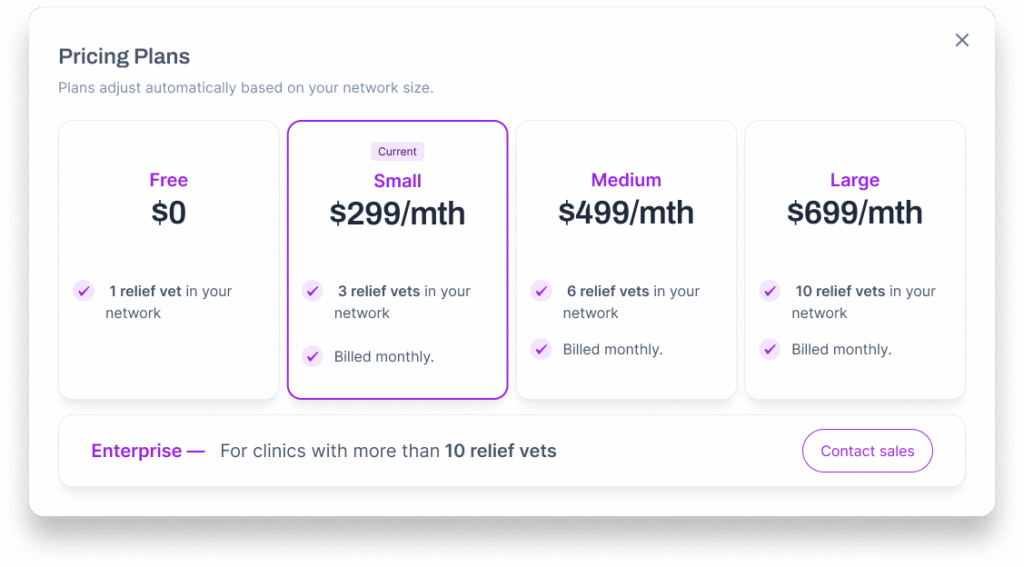
The real payoff comes after that first shift. A relief vet who fits your place can join your own network after a certain number of shifts, and be booked again on your terms, with no per-shift fee. You’ve run a no-pressure audition. And if they turn out to be someone you want for good, we don’t charge a placement fee to bring them on permanently. The bridge you built to get through the gap becomes the pipeline that closes it.
And if that conversion never happens — plenty of relief vets prefer to stay relief, and that’s their call to make — you’ve still come out ahead: the bridge gave you the time to find the right permanent hire on your own schedule, not under duress.
The 30/60/90 view
Zoom out past the 48 hours and the resignation stops looking like a disaster and starts looking like a sequence you’re managing:
- The first 30 days: Coverage is stable via relief. Your associate finishes their notice without a death march. You begin the permanent search calmly, with a clear picture of the gap you mapped on day one.
- By 60 days: You’ve worked with one or two relief vets and learned who clicks with your practice. You have real performance data, not résumés. Your by-name clients have been seen the whole time and have no reason to look elsewhere.
- By 90 days and beyond: You either convert a relief vet who’s already proven themselves, or you complete a deliberate search for a permanent hire, with relief continuing to cover any remaining gap so the decision is never forced.
That’s the difference between a practice that absorbs a resignation and one that’s destabilized by it. Not speed. Sequence. Stabilize the coverage, protect the client relationships, and give yourself the runway to hire the right person instead of the available one.
Your vet gave notice. It’s this week’s problem, not the end of the practice. Work it in order.
Manage Relief Coverage Your Way
Build your network, set your rates, and access backup coverage when you need it.